In the dynamic landscape of manufacturing, the integration of advanced technologies has become essential for driving innovation, efficiency, and competitiveness. Generative AI solutions have emerged as a transformative force, offering manufacturers the capabilities to optimize processes, accelerate design innovation, and unlock new possibilities. Behind the scenes of these powerful solutions lie a myriad of tools and techniques that enable their development and deployment. This article delves into the tools and techniques involved in Generative AI solution for manufacturing, exploring the methodologies, algorithms, and technologies that power these innovative solutions.
Introduction to Generative AI Solutions in Manufacturing
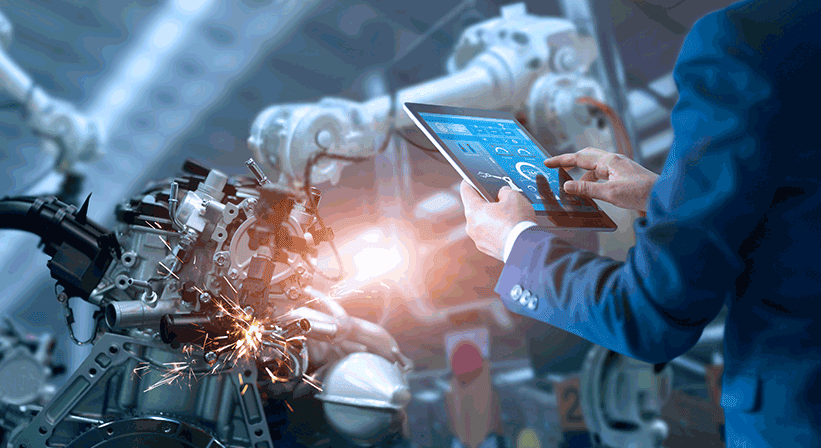
Generative AI solutions represent a subset of artificial intelligence focused on creating new content autonomously. In the manufacturing domain, these solutions leverage advanced algorithms, machine learning techniques, and vast datasets to generate designs, optimize processes, and even develop entirely new solutions without explicit human input. By harnessing the power of Generative AI, manufacturers can unlock new possibilities, overcome challenges, and drive innovation across various aspects of the manufacturing lifecycle.
Understanding the Tools and Techniques
The development and deployment of Generative AI solution for manufacturing require a diverse set of tools and techniques. From data preprocessing and algorithm selection to model training and validation, numerous methodologies and technologies are employed to create effective and efficient Generative AI solutions.
Data Preprocessing
Data preprocessing is a critical step in the development of Generative AI solutions, involving the cleaning, transformation, and normalization of raw data to prepare it for analysis and modeling. Techniques such as data cleaning, feature scaling, and dimensionality reduction are commonly used to preprocess manufacturing data, ensuring it is accurate, consistent, and suitable for training machine learning models.
Algorithm Selection
The selection of appropriate algorithms is crucial for the success of Generative AI solution for manufacturing. Depending on the specific use case and objectives, different algorithms may be employed, including generative adversarial networks (GANs), variational autoencoders (VAEs), and reinforcement learning algorithms. Each algorithm has its strengths and weaknesses, and careful consideration must be given to selecting the most suitable algorithm for the task at hand.
Model Training and Optimization
Model training and optimization involve the process of training machine learning models on labeled or unlabeled data to learn patterns, relationships, and structures. Techniques such as supervised learning, unsupervised learning, and reinforcement learning are used to train Generative AI models on manufacturing data, enabling them to generate designs, optimize processes, and make predictions with high accuracy and efficiency. Hyperparameter tuning, regularization, and optimization algorithms are employed to optimize model performance and generalization capabilities.
Validation and Testing
Validation and testing are essential steps in the development of Generative AI solutions, ensuring they perform as intended and meet specified criteria. Techniques such as cross-validation, holdout validation, and test set evaluation are used to assess model performance, identify potential issues, and validate the robustness of Generative AI solutions. Rigorous testing and validation procedures are essential to ensure the reliability, accuracy, and effectiveness of Generative AI solutions in real-world manufacturing environments.
Deployment and Integration
Deployment and integration involve the implementation of Generative AI solution for manufacturing into production systems and workflows. Techniques such as containerization, orchestration, and continuous integration/continuous deployment (CI/CD) are used to deploy Generative AI models into production environments seamlessly. Integration with existing systems, applications, and databases is essential to ensure seamless data flow and interoperability between Generative AI solutions and other manufacturing systems.
Advanced Tools and Technologies
In addition to fundamental methodologies and techniques, Generative AI solution for manufacturing leverage advanced tools and technologies to enhance performance, scalability, and reliability. From deep learning frameworks and cloud computing platforms to edge computing devices and IoT sensors, a wide array of tools and technologies are employed to develop and deploy cutting-edge Generative AI solutions.
Deep Learning Frameworks
Deep learning frameworks such as TensorFlow, PyTorch, and Keras are widely used in the development of Generative AI solutions for manufacturing. These frameworks provide high-level APIs, pre-trained models, and scalable infrastructure for building, training, and deploying deep learning models, enabling rapid prototyping and experimentation with Generative AI algorithms.
Cloud Computing Platforms
Cloud computing platforms such as Amazon Web Services (AWS), Microsoft Azure, and Google Cloud Platform (GCP) provide scalable infrastructure and services for developing, deploying, and managing Generative AI solutions in the cloud. These platforms offer a wide range of services, including compute, storage, and machine learning, that enable manufacturers to leverage the power of Generative AI without the need for significant upfront investment in hardware or infrastructure.
Edge Computing Devices
Edge computing devices such as GPUs, TPUs, and FPGAs are used to deploy Generative AI models at the edge of the network, closer to where data is generated and consumed. These devices provide low-latency, real-time processing capabilities that are essential for applications such as predictive maintenance, quality control, and process optimization in manufacturing environments.
IoT Sensors
IoT sensors are deployed throughout manufacturing facilities to collect real-time data on equipment performance, production processes, and environmental conditions. These sensors generate vast amounts of data that can be analyzed and processed by Generative AI solutions to optimize processes, improve quality, and reduce downtime in manufacturing operations.
Simulation Software
Simulation software such as ANSYS, Simulia, and COMSOL Multiphysics is used to simulate complex physical phenomena, such as fluid flow, heat transfer, and structural mechanics, in manufacturing processes. These simulations generate large datasets that can be used to train Generative AI models and optimize processes, enabling manufacturers to improve product quality, reduce costs, and accelerate time-to-market.
Case Studies and Real-World Applications
Generative AI solutions have been applied across various domains within manufacturing, demonstrating their effectiveness and potential to drive innovation and efficiency. From automotive design and aerospace engineering to pharmaceutical manufacturing and consumer goods production, Generative AI solutions are revolutionizing traditional practices and reshaping the industry.
Automotive Design Optimization
In the automotive industry, Generative AI solutions are used to optimize vehicle designs for performance, safety, and fuel efficiency. By analyzing historical data, market trends, and customer preferences, Generative AI algorithms generate innovative designs that meet or exceed design requirements and regulatory standards, enabling manufacturers to differentiate their products in a competitive market landscape.
Aerospace Engineering
In aerospace engineering, Generative AI solutions are used to design and optimize aircraft components, such as wings, fuselages, and engine components. By simulating various design configurations and performance criteria, Generative AI algorithms generate designs that minimize weight, maximize aerodynamic efficiency, and enhance structural integrity, enabling manufacturers to improve fuel efficiency, reduce emissions, and enhance safety in aircraft design.
Pharmaceutical Manufacturing
In pharmaceutical manufacturing, Generative AI solutions are used to optimize drug discovery, formulation, and production processes. By analyzing chemical structures, biological data, and clinical trial results, Generative AI algorithms generate novel drug candidates, optimize formulations, and streamline production processes, enabling manufacturers to accelerate time-to-market, reduce costs, and improve patient outcomes.
Consumer Goods Production
In consumer goods production, Generative AI solutions are used to design and optimize products such as apparel, footwear, and electronics. By analyzing consumer preferences, market trends, and production capabilities, Generative AI algorithms generate customized designs that resonate with consumers, enabling manufacturers to offer personalized products, enhance brand loyalty, and drive revenue growth.
Conclusion: Embracing the Power of Generative AI Solutions
In conclusion, the development and deployment of Generative AI solutions for manufacturing require a diverse set of tools, techniques, and technologies. From data preprocessing and algorithm selection to model training and deployment, numerous methodologies and technologies are employed to create effective and efficient Generative AI solutions. By leveraging advanced tools and techniques, manufacturers can harness the power of Generative AI to optimize processes, accelerate innovation, and unlock new possibilities, positioning themselves for success in the digital age of manufacturing.
 Finance Blog
Leave a comment