In recent years, the healthcare industry has seen a surge in the adoption of advanced technologies to improve patient care, enhance operational efficiency, and drive innovation. One such technology that holds immense promise is Enterprise Generative AI (Artificial Intelligence) solutions. This article delves into the compelling need and importance of deploying Enterprise Generative AI solutions within the healthcare sector, exploring its potential to revolutionize patient outcomes, optimize clinical workflows, and catalyze medical research and development.
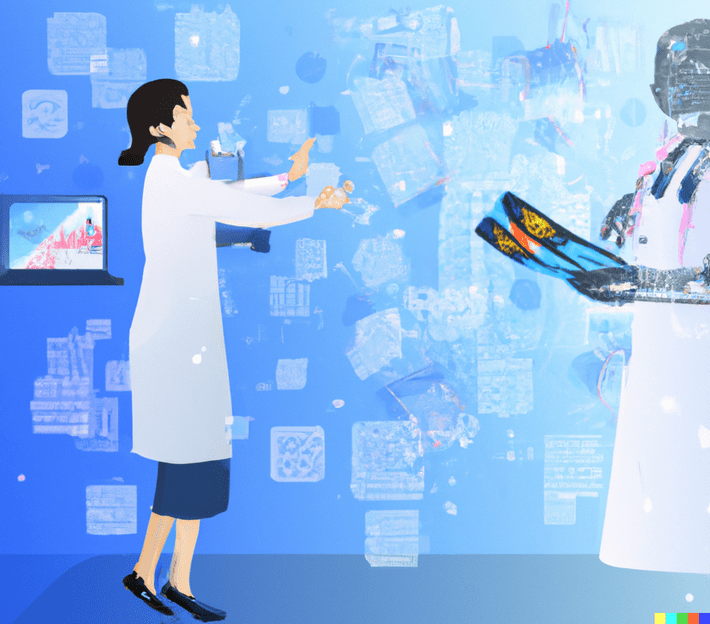
Introduction to Enterprise Generative AI in Healthcare
Understanding Generative AI
Generative AI refers to a subset of artificial intelligence that focuses on generating new content or data. Unlike traditional AI systems that rely on predefined rules or algorithms, enterprise generative AI solution for healthcare utilizes deep learning techniques to understand patterns in data and create new content autonomously.
The Evolution of AI in Healthcare
The healthcare industry has witnessed a significant evolution in the use of AI technologies. Initially employed for administrative tasks and data management, AI has now expanded its scope to include clinical decision support, medical imaging analysis, drug discovery, and patient care delivery.
The Need for Enterprise Generative AI in Healthcare
Addressing Complex Healthcare Challenges
Data Complexity
Healthcare generates vast amounts of data, including patient records, medical imaging files, genomic sequences, and clinical trial data. Managing and analyzing this data manually is time-consuming and error-prone, highlighting the need for AI-driven solutions.
Clinical Decision Support
Physicians are faced with complex medical cases and treatment decisions on a daily basis. Enterprise Generative AI can provide valuable decision support by analyzing patient data, medical literature, and treatment guidelines to recommend personalized treatment plans.
Enhancing Patient Care and Outcomes
Personalized Medicine
Each patient is unique, and their response to treatment varies based on individual factors such as genetics, lifestyle, and medical history. Enterprise Generative AI enables the development of personalized treatment strategies tailored to each patient’s specific needs, resulting in better outcomes and reduced adverse effects.
Early Disease Detection
Early detection of diseases is crucial for successful treatment outcomes. Generative AI solutions can analyze medical imaging scans, genetic data, and other diagnostic tests to identify subtle signs of disease at an early stage when interventions are most effective.
Optimizing Clinical Workflows
Streamlining Administrative Tasks
Healthcare providers spend a significant amount of time on administrative tasks such as documentation, scheduling, and billing. Generative AI solutions can automate these tasks, allowing clinicians to focus more on patient care and less on paperwork.
Improving Diagnostic Accuracy
Medical imaging interpretation is a critical aspect of clinical diagnosis. Generative AI algorithms trained on large datasets can assist radiologists in interpreting images more accurately, reducing the likelihood of misdiagnosis and improving patient outcomes.
Driving Medical Research and Innovation
Drug Discovery and Development
The process of drug discovery is time-consuming and costly. Generative AI accelerates this process by predicting drug candidates, simulating molecular interactions, and identifying potential side effects, leading to the development of safer and more effective treatments.
Precision Oncology
Cancer treatment is undergoing a paradigm shift towards precision oncology, which aims to tailor therapies to the molecular characteristics of individual tumors. Generative AI plays a crucial role in analyzing genomic data, identifying therapeutic targets, and predicting treatment response in cancer patients.
Importance of Enterprise Generative AI in Healthcare
Enhancing Diagnostic Accuracy and Precision
Generative AI solutions leverage advanced algorithms and deep learning techniques to analyze complex medical data with a high degree of accuracy and precision. By assisting healthcare providers in diagnosis and treatment planning, these solutions improve patient outcomes and reduce medical errors.
Facilitating Personalized Medicine
Personalized medicine takes into account individual variations in genetics, environment, and lifestyle to tailor medical interventions to each patient’s unique needs. Enterprise Generative AI enables the development of personalized treatment plans by analyzing patient data and predicting individual responses to therapies.
Optimizing Resource Allocation
Healthcare resources, including hospital beds, medical equipment, and personnel, are often limited and need to be allocated efficiently. Generative AI solutions can optimize resource allocation by predicting patient demand, identifying bottlenecks in workflows, and streamlining operational processes.
Driving Innovation and Research
Generative AI accelerates medical research and innovation by analyzing large datasets, simulating biological processes, and generating novel insights. By facilitating drug discovery, molecular modeling, and clinical trial design, these solutions pave the way for the development of breakthrough treatments and therapies.
Improving Patient Engagement and Experience
Patient engagement is essential for promoting positive health outcomes and fostering patient satisfaction. Generative AI solutions can enhance patient engagement by providing personalized health recommendations, facilitating remote monitoring, and delivering tailored educational content.
Ensuring Data Privacy and Security
Healthcare data is highly sensitive and subject to strict privacy regulations, such as HIPAA (Health Insurance Portability and Accountability Act) in the United States. Enterprise Generative AI solutions prioritize data privacy and security by implementing robust encryption, access controls, and compliance measures to protect patient information.
Conclusion
Enterprise Generative AI holds immense potential to transform healthcare by addressing complex challenges, enhancing patient care, and driving innovation. From personalized medicine and diagnostic support to clinical workflow optimization and medical research, the applications of Generative AI are vast and far-reaching.
As healthcare organizations continue to embrace digital transformation, the need for Enterprise Generative AI solutions will only grow stronger. By leveraging the power of AI-driven insights, healthcare providers can deliver more effective, efficient, and personalized care, ultimately improving patient outcomes and advancing the field of medicine.
 Finance Blog
Leave a comment